Award Trophy Strong Line Icon
First Impressions: Clean, Confident, and Ready for Stitching
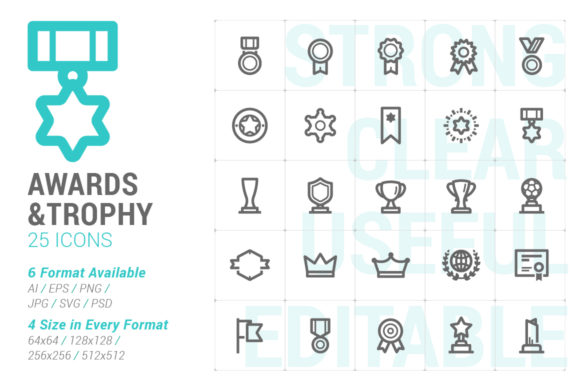
When I opened the Award Trophy Strong Line Icon files, what struck me immediately wasn’t just its simplicity—but its quiet authority. It’s not flashy or overly detailed; it’s a bold, centered trophy silhouette rendered in confident, unbroken lines. The design feels purpose-built for embroidery: no fragile serifs, no micro-details that vanish under thread, no overlapping elements that complicate digitizing. As a designer who’s stitched everything from baby onesies to boutique aprons, I appreciate how this icon carries weight without clutter—ideal for a custom embroidered tote bag heading to a school fundraiser, or a minimalist sweatshirt for a small business team launch.
This Isn’t Just an Icon—It’s a Story Starter
I recently used the Award Trophy Strong Line Icon on a set of linen tea towels for a local craft fair. Paired with subtle running-stitch text (“Best Mom,” “Top Chef,” “Most Likely to Nap”), it became the visual anchor—recognizable at a glance, easy to stitch cleanly, and instantly meaningful. Customers didn’t hesitate. They picked up the towels, smiled, and said, “That’s *exactly* what I need for my sister’s birthday.” That kind of emotional resonance is rare in stock icons—and it’s why this design works so well for personalized gifts, holiday embroidery, and nursery decor where sincerity matters more than sparkle.
Where It Shines (and Where to Pause)
The Award Trophy Strong Line Icon excels on medium-to-heavy fabrics: cotton twill for patches, fleece-lined sweatshirts, canvas totes, and structured aprons. Its strong line weight holds up beautifully in satin stitch, reads clearly in fill stitch at 3–4” widths, and avoids the “fuzzy edge” problem common with low-contrast or thin-line graphics. On baby onesies? Yes—but only if hooped carefully with tear-away + cut-away stabilizer combo and stitched at moderate density. On stretchy fabric like jersey tees? Proceed with caution: test first, reduce stitch count slightly, and avoid placing near side seams or curved hems where distortion creeps in.
It’s less ideal for tiny hoop sizes (<2.5”) or ultra-fine textiles like silk charmeuse—those demand lighter line weights and tighter digitizing control. And while the black-and-white versions look crisp in printable mockups, remember: on dark fabric, you’ll want high-contrast thread (e.g., bright gold or white) to preserve legibility. Don’t assume the default vector outline translates directly to clean stitch edges—always check how corners behave in your embroidery software before sending to machine.
Real-World Fit for Real Creative Businesses
Etsy sellers will love how easily the Award Trophy Strong Line Icon integrates into cohesive product lines: pair it with editable text layers in your .psd or .ai files to create instant “Employee of the Month” pillow covers or “Graduation Day Hero” kitchen towels. Small shop owners can use the individual .svg files to build branded digital embroidery files for sale—just confirm licensing permits commercial redistribution before listing as a standalone machine embroidery design. For craft fair vendors, it’s a fast-turnaround hero motif: embroider it on denim caps for coaches, stitch it onto organic cotton blankets for baby showers, or apply it as an embroidered patch for scout troop gear.
Design Integrity Meets Practical Craftsmanship
What makes the Award Trophy Strong Line Icon feel trustworthy isn’t just its file variety (.ai, .eps, .svg, .png, .psd, .jpg)—it’s how thoughtfully those files are delivered. Illustrator artboards mean you can isolate size variants or color versions without hunting through layers. Eps8 compatibility ensures older embroidery digitizing suites won’t choke. Individual .svg files per variation? A huge time-saver when prepping for web mockups or client presentations.
But file flexibility doesn’t replace craft judgment. Before stitching your first finished product: run a test on scrap fabric matching your target garment’s weight and stretch. Check thread color contrast—not just on screen, but under natural light. Review stitch density: too dense on lightweight fabric = puckering; too sparse on dark backgrounds = weak impact. Confirm hoop size fits comfortably around the design’s outermost points—especially important for caps or curved surfaces where off-center tension distorts shape.
Why This Icon Builds Trust—Not Just Decoration
In handmade product markets, customers don’t just buy stitches—they buy intention. The Award Trophy Strong Line Icon reads as deliberate, professional, and human-made—not generic or clip-art-y. That perception lifts perceived value: a $28 embroidered pillow cover feels premium when the trophy icon is sharp, balanced, and confidently scaled. It supports brand consistency across products (same icon on a tote, patch, and tea towel), strengthens giftability (“This feels special, not mass-produced”), and quietly reassures buyers that the maker paid attention to detail—even before they see the stitching.
Final Notes from the Hoop
- Always test the Award Trophy Strong Line Icon on scrap fabric *before* committing to your final project—especially for baby embroidery or holiday embroidery where deadlines loom.
- Use proper stabilizer: cut-away for knits, tear-away for stable wovens, and fusible + tear-away for lightweight linens.
- Compare how it looks in black thread on light fabric vs. white thread on dark fabric—you’ll likely prefer one over the other for your core product line.
- If offering digital embroidery files to customers, verify licensing terms allow resale or bundling—don’t assume “commercial use” covers derivative digital products.
- For applique design workflows, trace the outline in your embroidery software first—its clean geometry makes it a natural candidate for raw-edge or fused applique.
The Award Trophy Strong Line Icon won’t solve every embroidery challenge—but it solves the right ones. It’s reliable, adaptable, and quietly expressive. Whether you’re stitching for joy, profit, or personal meaning, this icon earns its place in your design assets—not as filler, but as foundation.